
More than 50 million adults in the United States seek massage therapy each year for relief from stress, pain, or fatigue. As everyday pressures build, many turn to different massage techniques hoping for real results in their body and mind. With a wide variety of approaches available, understanding how each method works can help you experience greater comfort, balance, and lasting wellness.
Table of Contents
- Defining Massage Techniques and Their Purpose
- Comparing Popular Massage Styles and Methods
- Unique Characteristics of Each Massage Approach
- Health Benefits and Best-Use Scenarios
- How to Choose the Right Technique for You
Key Takeaways
| Point | Details |
|---|---|
| Holistic Wellness | Massage therapy combines techniques that improve physical and mental health through soft tissue manipulation. |
| Variety of Techniques | Different massage styles, such as Swedish and Deep Tissue, cater to specific health goals and individual preferences. |
| Health Benefits | Regular massage can reduce stress, alleviate pain, and enhance overall circulation and immune function. |
| Personalized Selection | Choosing the right massage technique should consider personal health conditions, stress levels, fitness goals, and comfort with pressure. |
Defining Massage Techniques and Their Purpose
Massage therapy represents a holistic approach to wellness that involves scientifically manipulating the body’s soft tissues to improve physical and mental health. Massage techniques are specialized methods designed to address various physiological and psychological needs, utilizing precise movements and strategic pressure applications across different body regions.
According to the National Center for Complementary and Integrative Health, massage therapy fundamentally involves manipulating soft body tissues to manage health conditions and enhance overall wellness. These techniques have been practiced across numerous cultures throughout human history, demonstrating a universal recognition of touch as a powerful healing modality.
The primary purposes of massage techniques include:
- Reducing muscular tension and stiffness
- Improving blood and lymphatic circulation
- Enhancing flexibility and range of motion
- Alleviating stress and promoting deep relaxation
- Supporting the body’s natural healing processes
Professional massage therapists employ various techniques tailored to individual client needs. Encyclopedia.com describes massage as a scientific manipulation involving precise pressure applications, strategic muscle holding, and targeted movement patterns. These techniques are not merely about physical touch but represent a sophisticated approach to understanding and supporting the body’s intricate physiological systems.
Beyond physical benefits, massage techniques also play a crucial role in mental and emotional wellness. By activating the body’s relaxation response, these therapies can help reduce anxiety, improve sleep quality, and support overall psychological well-being. Understanding the nuanced differences between various massage techniques allows individuals to select the most appropriate approach for their specific health goals and personal comfort levels.
Comparing Popular Massage Styles and Methods
Massage techniques represent a diverse spectrum of therapeutic approaches, each designed to address specific physical and emotional wellness needs. Understanding the nuanced differences between these styles helps individuals select the most appropriate treatment for their unique health goals.
WebMD highlights that massage therapy encompasses multiple styles, each utilizing different pressures, movements, and targeted techniques. The most prevalent massage styles include:
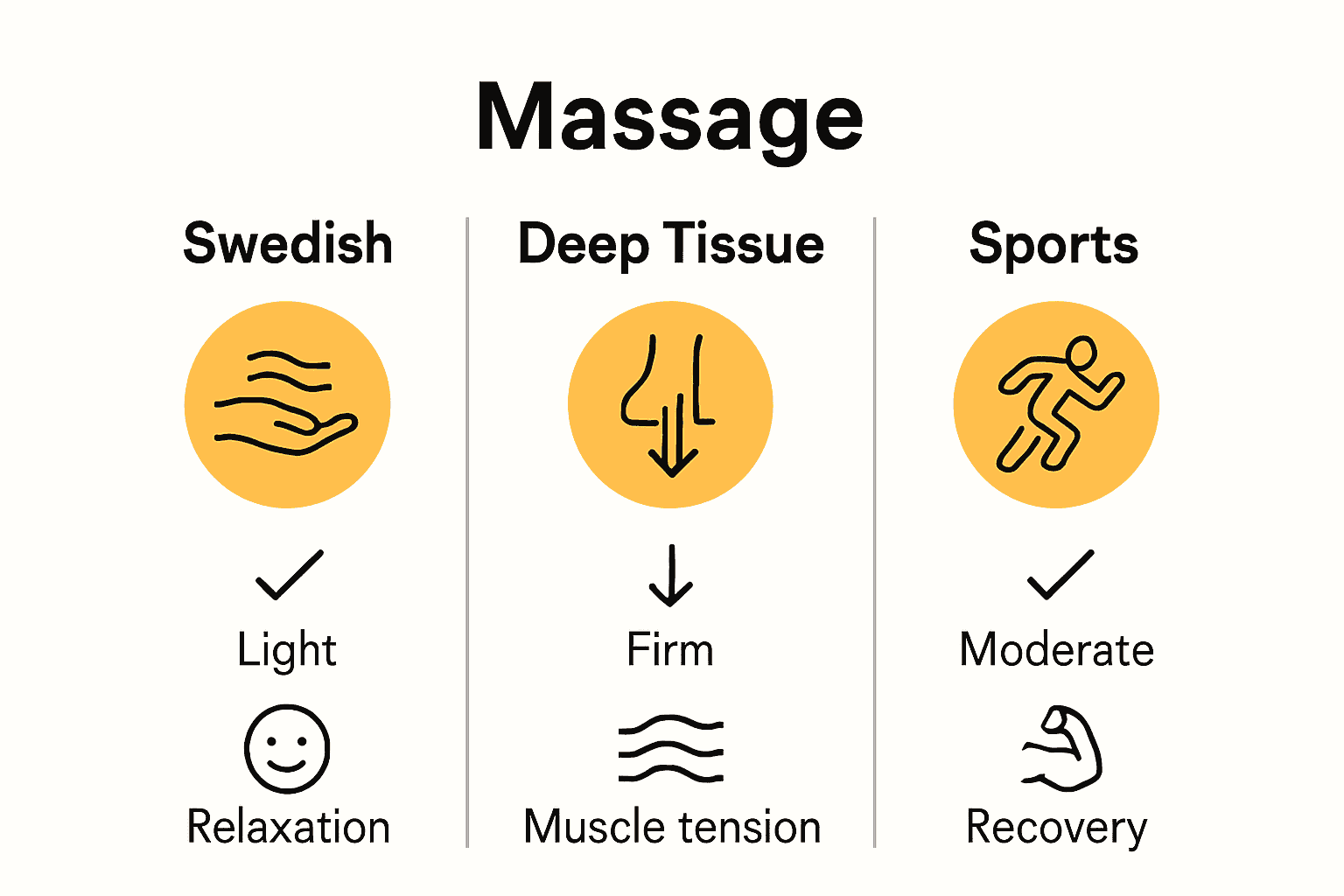
- Swedish Massage: Characterized by gentle, flowing strokes that promote overall relaxation
- Deep Tissue Massage: Focuses on releasing chronic muscle tension through intense pressure
- Sports Massage: Designed specifically for athletes to enhance performance and prevent injuries
- Trigger Point Therapy: Targets specific muscle knots and areas of concentrated tension
- Lymphatic Drainage Massage: Supports the body’s natural detoxification processes
Each massage style offers unique benefits and approaches to healing.
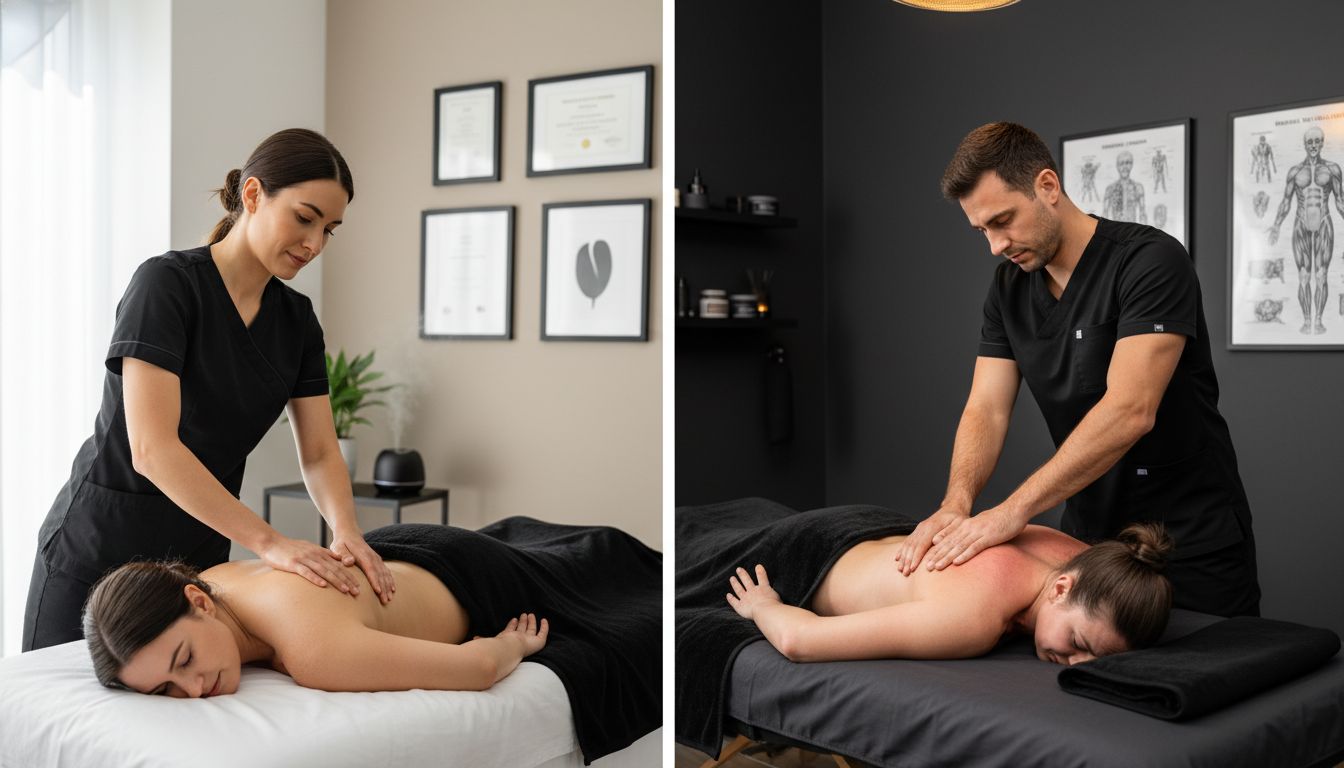 Swedish massage utilizes long, smooth strokes to improve circulation and induce relaxation, while deep tissue techniques apply more intense pressure to reach deeper muscle layers and release chronic tension. Sports massage differs by concentrating on muscle groups most used in specific athletic activities, helping prevent injuries and support recovery.
For those seeking personalized wellness solutions, understanding the massage style that best suits your needs becomes crucial. Whether you’re managing chronic pain, recovering from athletic training, or simply seeking stress relief, the right massage technique can significantly enhance your physical and mental well-being.
Unique Characteristics of Each Massage Approach
Massage techniques are far more than simple physical manipulations – they represent sophisticated therapeutic approaches with distinct philosophies and methodological nuances that target specific wellness outcomes. Each massage style carries its own unique blueprint for healing, designed to address different physiological and emotional needs.
National Center for Complementary and Integrative Health highlights that massage approaches vary significantly, with Western and Eastern traditions offering contrasting perspectives. Swedish massage, predominantly practiced in Western countries, utilizes techniques like effleurage and petrissage to promote relaxation and improve circulation, while Eastern modalities such as Shiatsu and Tuina focus more intently on energy flow and acupressure point stimulation.
Unique characteristics of different massage approaches include:
- Swedish Massage: Gentle, flowing strokes targeting overall relaxation
- Deep Tissue Massage: Intense pressure targeting deeper muscle layers
- Shiatsu: Applying precise pressure to specific energy points
- Thai Massage: Incorporates stretching and yoga-like movements
- Sports Massage: Focused on muscle groups used in athletic performance
Beyond physical techniques, each massage approach offers a distinct therapeutic philosophy. Some prioritize muscular release, while others emphasize energy balance or neurological reset. Sports massage, for instance, concentrates on preventing athletic injuries and enhancing performance, whereas lymphatic drainage massage supports the body’s natural detoxification processes.
Ultimately, understanding these unique characteristics allows individuals to select a massage approach that precisely matches their wellness goals, ensuring a more targeted and effective healing experience.
Health Benefits and Best-Use Scenarios
Massage therapy represents a powerful holistic approach to addressing both physical and mental health challenges, offering targeted interventions for diverse wellness needs. Understanding the specific benefits and ideal scenarios for different massage techniques empowers individuals to make informed decisions about their health and healing journey.
National Center for Complementary and Integrative Health highlights that massage therapy is fundamentally designed to manage health conditions and enhance overall wellness by improving blood and lymph flow, reducing muscular tension, and promoting deep relaxation. These therapeutic interventions go far beyond simple physical manipulation.
Key health benefits of massage therapy include:
- Stress Reduction: Lowering cortisol levels and promoting relaxation
- Pain Management: Alleviating chronic muscle tension and joint discomfort
- Improved Circulation: Enhancing blood and lymphatic flow
- Mental Health Support: Reducing anxiety and improving mood
- Immune System Boost: Supporting natural healing processes
WebMD emphasizes that different massage styles are uniquely tailored to address specific health concerns. For instance, deep tissue massage works best for individuals with chronic muscle pain, while Swedish massage is ideal for those seeking overall relaxation and stress relief. Sports massage techniques prove particularly beneficial for athletes looking to prevent injuries and enhance physical performance.
The most effective massage approach depends on individual health goals, physical condition, and personal wellness objectives. Whether you’re managing chronic pain, recovering from athletic training, or simply seeking a moment of profound relaxation, there’s a massage technique designed to support your unique health journey.
How to Choose the Right Technique for You
Selecting the ideal massage technique is a personal journey that requires careful consideration of your unique physical, emotional, and wellness needs. Like choosing the perfect pair of shoes, finding the right massage approach demands self-awareness and thoughtful evaluation of your body’s specific requirements.
National Center for Complementary and Integrative Health recommends consulting with a trained massage therapist to determine the most appropriate style for addressing your specific health conditions and personal preferences. This professional guidance can help you navigate the nuanced landscape of massage techniques.
Key factors to consider when choosing a massage technique include:
- Current Physical Condition: Areas of chronic pain or tension
- Stress Levels: Emotional and mental health needs
- Fitness Goals: Athletic performance or recovery objectives
- Pain Tolerance: Comfort with different pressure levels
- Specific Health Concerns: Existing medical conditions or injuries
WebMD emphasizes that understanding the various techniques and their unique benefits is crucial in making an informed decision. For those seeking personalized guidance, a comprehensive consultation with a registered massage therapist can help pinpoint the most effective approach for your individual wellness journey.
Ultimately, choosing the right massage technique is about listening to your body, understanding its needs, and finding a therapeutic approach that resonates with your overall health and well-being. Don’t be afraid to explore different styles and communicate openly with your massage therapist to discover the most transformative treatment for you.
Discover the Perfect Massage Technique Tailored Just for You
Choosing the right massage technique can feel overwhelming. The article highlights how each style addresses unique needs such as reducing muscular tension, managing stress, or enhancing athletic recovery. If you have struggled with deciding between Swedish, deep tissue, or lymphatic drainage massage, you are not alone. Understanding your body’s signals and wellness goals is key to finding effective relief and renewed balance.
At Verdure Registered Massage Therapy, our experienced therapists specialize in customized treatments that match the precise techniques discussed in the guide. Whether you want to soothe chronic pain, deepen relaxation, or boost your overall well-being, our holistic approach blends skilled hands with genuine care.
Take the next step toward healing with confidence. Visit Verdure Registered Massage Therapy today to explore our full range of therapeutic services and book a personalized session designed to meet your unique health goals. Learn more about different massage styles and how they can benefit you in your wellness journey at understanding massage techniques. Don’t wait to experience the transformative power of massage tailored just for you.
Frequently Asked Questions
What are the main benefits of different massage techniques?
Different massage techniques offer various benefits, such as reducing muscular tension, improving circulation, alleviating stress, and promoting relaxation. For instance, Swedish massage focuses on overall relaxation, while deep tissue massage targets chronic tension.
How do I know which massage technique is right for me?
Choosing the right massage technique involves considering factors such as your current physical condition, stress levels, fitness goals, and pain tolerance. Consulting with a trained massage therapist can help you select the most appropriate style based on your individual needs.
What is the difference between Swedish and deep tissue massage?
Swedish massage is characterized by gentle, flowing strokes aimed at promoting relaxation and improving circulation, while deep tissue massage uses intense pressure to target deeper muscle layers and release chronic tension. Each serves different therapeutic purposes.
Can massage techniques help with mental health issues?
Yes, various massage techniques can help with mental health by reducing anxiety, promoting relaxation, and improving sleep quality. By activating the body’s relaxation response, massage can significantly enhance overall psychological well-being.